
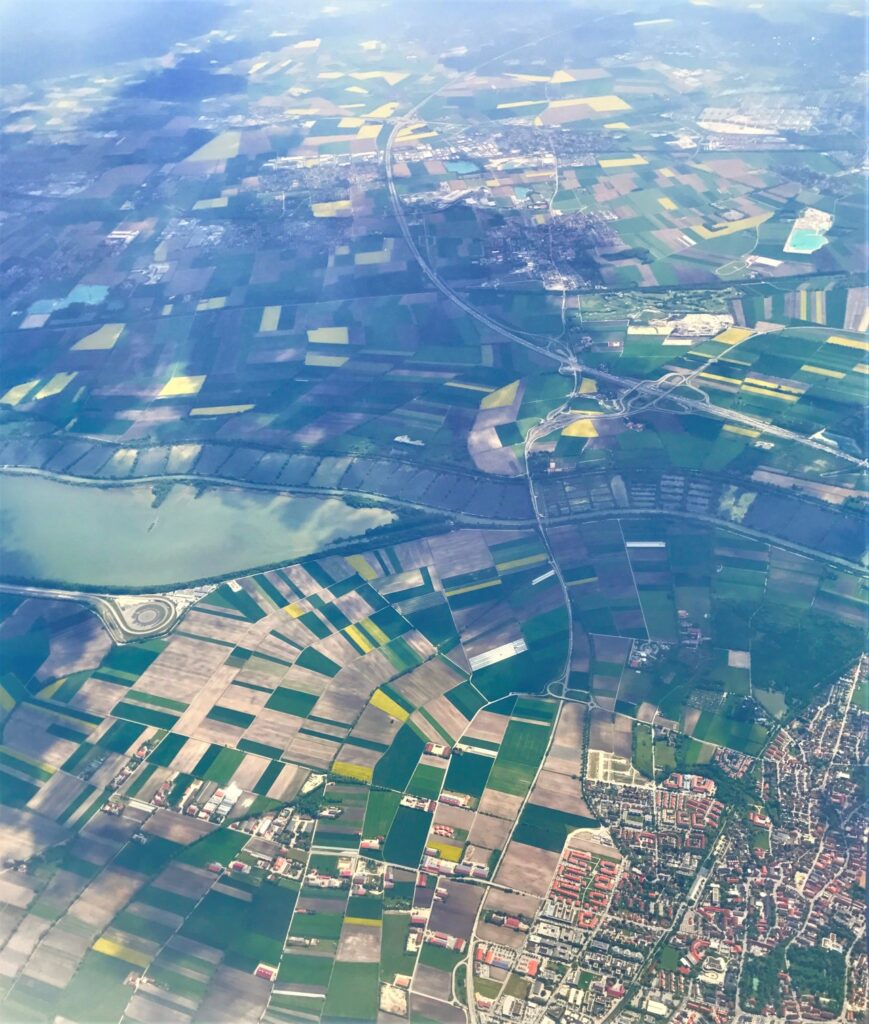
This story has a tinge of wistfulness mixed in. On a quiet note, I’m reflecting on my travels through a scattershot of images.
I can see the whirlwind it’s been as I scroll through my camera roll. I fly and, once again, marvel at the tapestries of the world beneath me. Each time it’s a different patchwork of colour, and the meandering lines that connect it all are purposeful and artful, as if guided by a master calligrapher. The clouds — they play tricks with shadows over land and glassy pools. Once in their lair, when all is white, the billowy mass hypnotizes the soul into staying a while, and I sink in. But that’s another story.
Pictures turn to cobblestones and honey-coloured stone houses along Venetian canals. Memories continue through open windows, and terracotta rooftops mix with the music of bells marking the day’s end.
The images blend and blur together like a moving picture book. Time mixed with adventure moves so quickly.
But today, I settle on just one page.
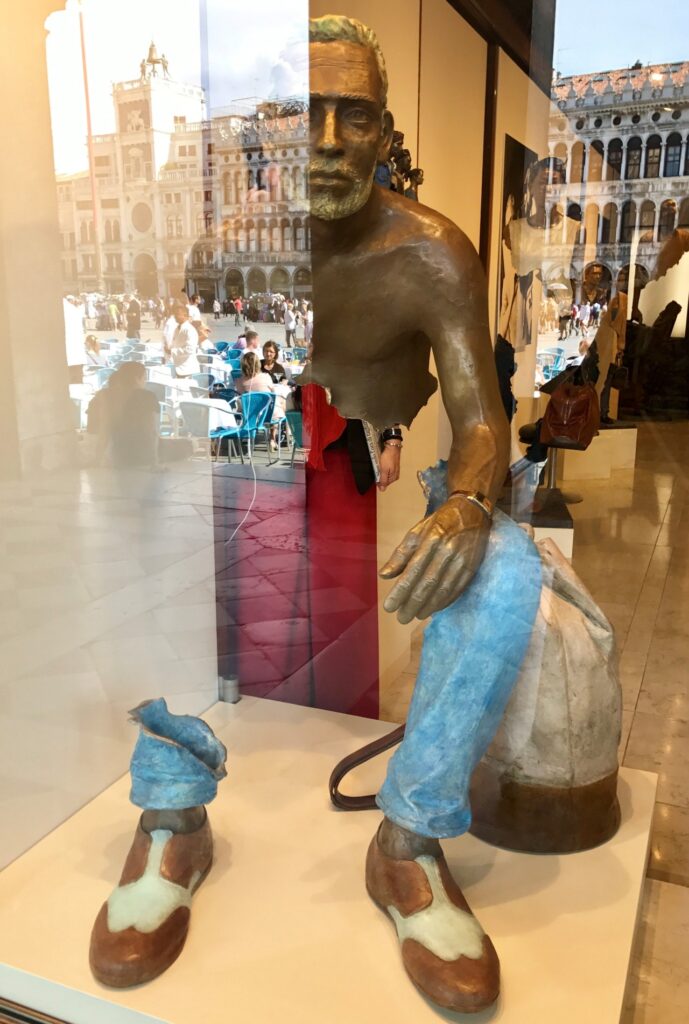
Through a gallery window in Venice, the quiet, self absorbed gaze of a seated figure was enough to slow me down while everything kept buzzing in St. Mark’s Square.
He seemed unfinished, this partial sculpture of a man in bronze with his leather-strapped backpack. There was a weathering to the half-man and a patina to his half-clothes. He appeared to have travelled far. Seen things. I wondered if he’d left some of himself behind — gradual fragments lost here and there along the journey.
The clear window caught every reflection of the famous piazza. The clock tower, the colonnade and café tables with the whitest sunlit linens played into the gallery. It was a rich scene and so was the half-man who offered his unfinished space for the surrounding world to dwell in for a short time. Strangely his lack of materiality is what completed him. It made him whole. The quiet gaze, it seemed, was now committed, and it shared an open intuition with things lost and rediscovered.
Strangely, his lack of materiality is what completed him.
“The Metaphor of the Trip,” by contemporary artist Bruno Catalano, is a unique and self-interpretive exhibition that I experienced in person one May at the Galleria Ravagnan in Venice. The Moroccan-born sculptor, who later emigrated to France, takes inspiration from great masters such as Rodin, Giacometti and César.
Forced to leave Morocco as a child, he travelled with packs of memories and origin that are represented in his work. His ethereal bronze characters, Les Voyageurs, with glaringly missing pieces, are each accompanied by baggage and are an expression of movement through life.
Through their non-parts, Catalano’s travellers find distinction within their urban context. Offering themselves to different readings, they establish a fascinating dialogue between their environment and the creative musings of those who observe them. The bigger narrative lies between human life and travel. We are indeed each a journey.
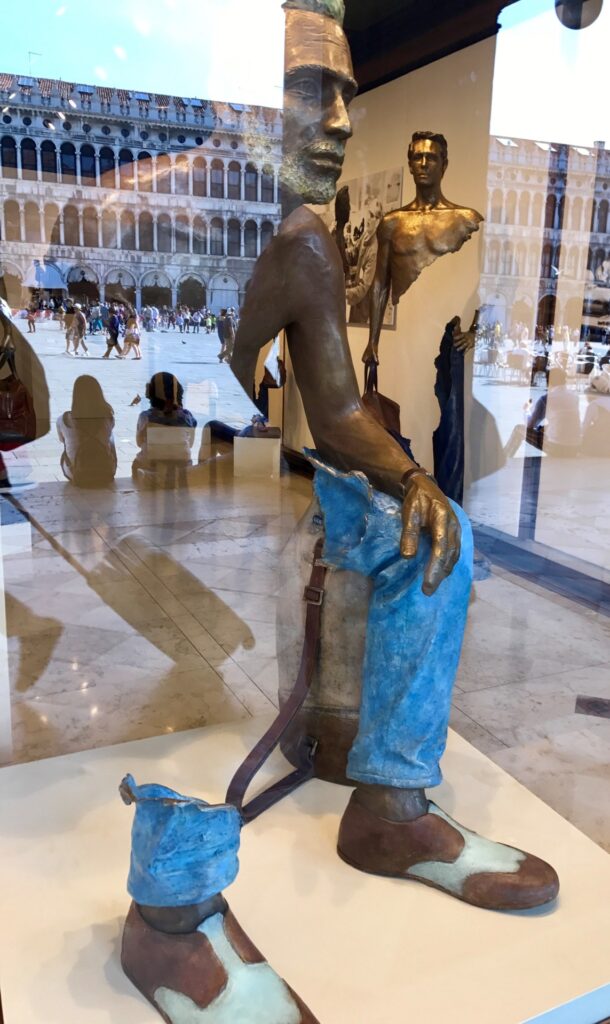
As a traveller, I experienced the art through a window. It was my observation point, offering its own set of glimpses within the ‘non-finished.’ I absorbed, took part, and left just a bit of myself behind, I suppose.
Reflecting back, my scene shows the ghost of a traveller moving through, backpack and suitcase in tow. Where was he heading, wondered? Our journeys, I realize, are deeply intertwined. They resonate long after, with the fragments of our footsteps and those of other seekers of adventure, connecting life with time and place.
My moving picture book is rich with untold stories. It leaves a lasting impression.